How to Watermark Your ID Before Sending a Copy (and Trace It if It Leaks)
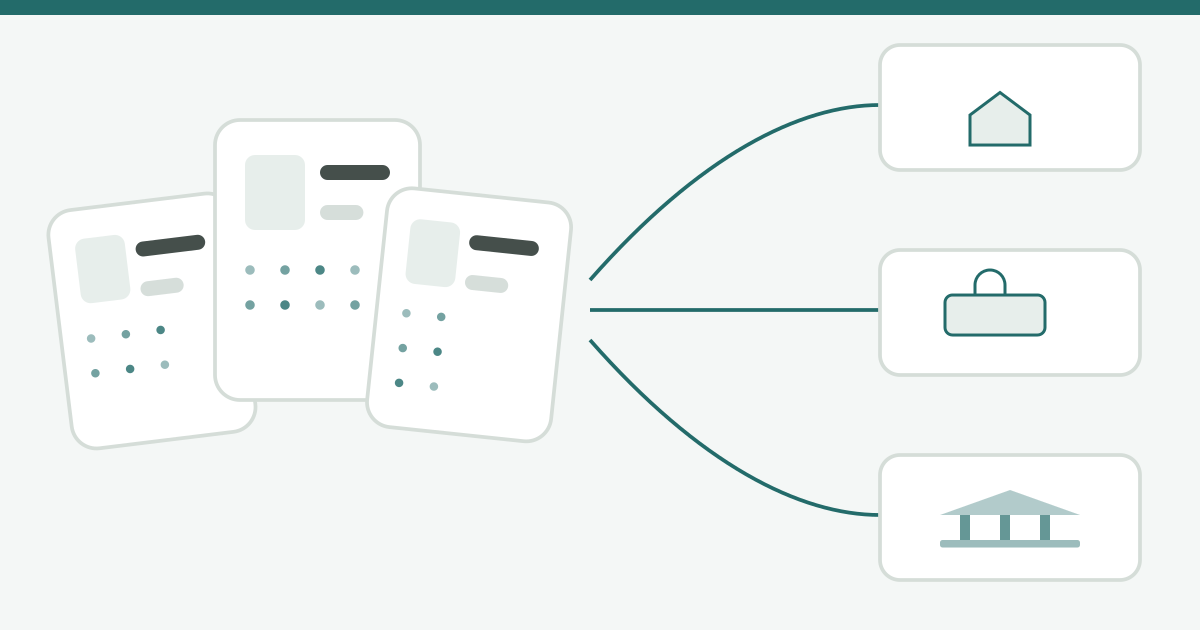
Short answer: Before you send a photo or PDF of your ID, give each recipient their own marked copy. A visible line like "For [recipient] rental application only, [date]" makes the copy harder to reuse. An invisible forensic watermark adds a second layer: if the copy shows up somewhere it shouldn't, you can check it and see which recipient's copy it was. Neither one stops someone from misusing your ID, and some verification flows won't accept an edited file, so ask first.
Last updated: October 12, 2026.
Why this matters
A copy of your passport, national ID or driver's license ends up in a lot of inboxes: a landlord, a new employer, a coworking space, a bank, a marketplace, an accountant. Each of those copies can be forwarded, stored in a shared folder or caught in someone else's data breach. When a copy turns up later, the usual problem is that you have no idea which of the ten places it came from.
Two kinds of marks, two different jobs
| Visible text overlay | Invisible forensic watermark | |
|---|---|---|
| What it does | Tells anyone looking at the copy what it was for | Ties the copy to the recipient you chose |
| Deters reuse | Yes, a copy stamped "rental application only" is awkward to reuse | Not by itself, nobody sees it |
| Survives a screenshot | Yes, but it can be cropped or edited out | Partly, if enough of the image is visible |
| Tells you who it came from | Only if nobody removed it | Yes, when detection finds a match |
| Risk of rejection | Higher if it covers the photo, number or machine-readable zone | Low visual change, but the file is still a modified copy |
They work best together: the visible line discourages casual reuse, and the invisible mark is what's left if someone removes the visible one.
Mark
Share
Leak
Detect
Step by step
- Ask the recipient what they accept. Many in-app identity checks take a live photo with your phone camera, so there's no file to mark. Some regulated checks require an unedited original. If they need an untouched file, respect that and skip the overlay.
- Use one copy per recipient. Never reuse the same marked file for two people, or you won't be able to tell them apart.
- Add a visible line with the recipient's name, the purpose and the date. Keep it away from your photo, the document number and the machine-readable lines at the bottom, so the document still reads clearly.
- Add the invisible mark for that recipient. In Markedfile you upload the image or PDF, type an identifier like "landlord-maple-st-oct-2026", and download the marked copy.
- Send only the marked copy and keep a short note of who got which identifier.
- If a copy turns up somewhere, upload it (or a screenshot of it) to Detect and see which identifier it matches.
What an invisible mark can and can't tell you
- A match points to which copy leaked. It doesn't tell you who shared it or why, and it isn't legal proof on its own, but it tells you where to start asking.
- Markedfile reports a confidence score rather than a yes or no. As reported scores (not guaranteed detection): about 99% for the exact file, 95% from the signed metadata mark alone, and about 81% for a re-saved JPEG or a screenshot, where only the visual pattern is left.
- Size limits: Images and video frames under 96×96 px are rejected; everything else uses the same pattern. A crop of roughly 256 px of a detailed area is the approximate minimum. A full photo of an ID card is usually well above that; a tiny thumbnail isn't.
- PDF screenshots: a photo in a PDF needs about 160 pt of the page visible as an approximate minimum. Dense text alone is often not detected.
- Nothing is 100%. Heavy compression, very small copies or deliberate damage can break detection.
Markedfile
Start today
Imatag
Talk to sales
For companies that send owners' or directors' IDs
Founders and finance teams send passport copies of owners and directors to banks, payment providers, registered agents and new vendors all the time. The same steps apply: one marked copy per recipient, a short log of identifiers, and detection if a copy appears where it shouldn't. On Business and Enterprise a shared workspace keeps those records in one place for the team, and the API can mark copies automatically.
Where Markedfile fits
Markedfile is self-serve forensic watermarking for images, PDFs and, on Business and Enterprise, video. Files are processed in memory and are not stored. It started because at the companies behind it, the team needed to mark files before sharing them, including PDFs and photos sent for identity verification, and no self-serve tool did it.
Plans: Free (5 active files, detectable for 6 months); Starter $9.99; Pro $19.99 (unlimited files); Business $49.99 (shared workspace, video, API); Enterprise on a custom quote. For most people sending an ID to a handful of places, Free is enough.
Related reading: visible vs invisible watermarks, can you trace a screenshot back to its source and invisible watermark vs EXIF metadata.
FAQ
Will a bank or verification service reject a watermarked ID?
Some will. A visible overlay that covers your photo or document number is the most likely to be rejected. The invisible mark doesn't noticeably change the image, but the file is still a modified copy, and some checks require an unedited original or a live camera capture. Ask before you send.
Does a watermark prevent identity theft?
No. It makes a copy less useful for casual reuse and helps you find out which copy leaked. Keep sending your ID only where it's actually needed.
Should I use a different mark for every recipient?
Yes. The point is that each copy is unique, so a match tells you exactly which one got out.
Does Markedfile keep a copy of my ID?
No. Files are processed in memory and their contents are not stored.
Can I mark a PDF scan instead of a photo?
Yes. PDFs get the same invisible mark plus a signed metadata mark. On Free, PDFs can be up to 10 pages.
Disclaimer
This article is not legal advice. Markedfile does not decide whether an ID was misused, whether identity theft occurred, or what you should do next. It only helps identify which marked copy a leaked image, PDF (or, on Business and Enterprise, video) appears to come from. Talk to a lawyer before you act on a match.
Next steps
Mark the next copy of your ID you send, with an identifier for that recipient. Plans are on pricing, and the personal page explains how marking works.
Mark each copy before you share it
Create a free account. You can mark 5 files and see whose copy leaked.