Sending Work Before You're Paid: How Freelancers Can Trace Leaked Deliverables
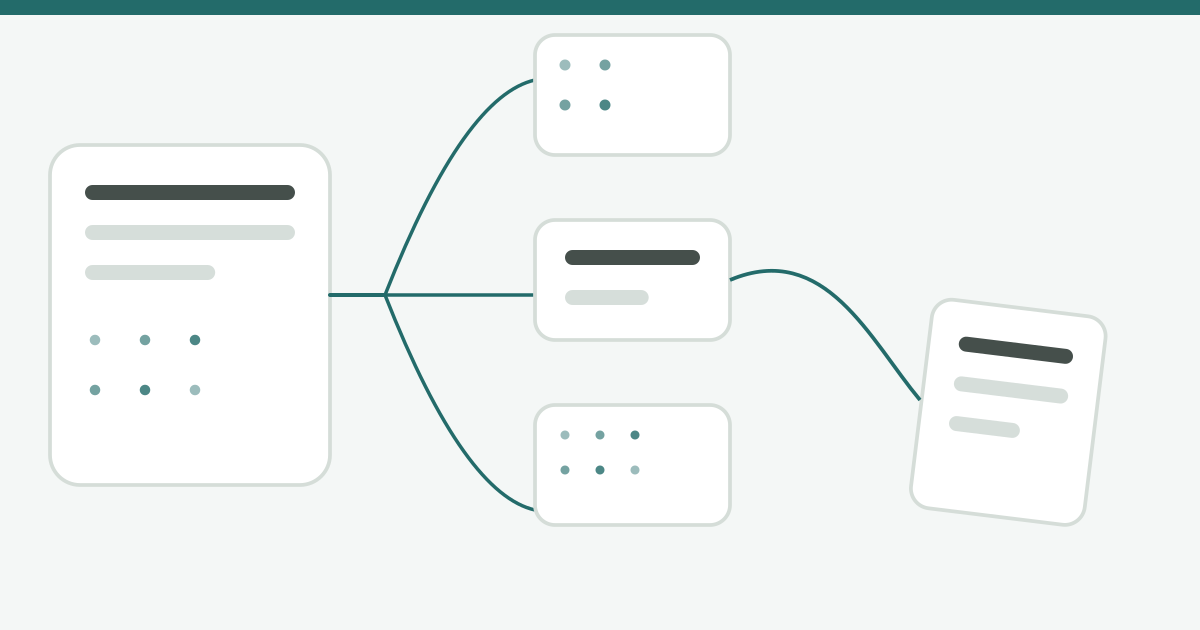
Short answer: When you send a client work before the invoice is paid, or deliver through an agency to a client you never talk to, give every contact their own marked copy. A visible "review copy" line keeps the status obvious. An invisible forensic watermark lets you check a copy that turns up later and see which contact's copy it was. It doesn't stop anyone from using your work and it won't collect an invoice for you, but it replaces guessing with a specific question to a specific person.
Last updated: October 12, 2026.
Where freelance work goes after you hit send
Most freelancers don't lose work to hackers. They lose track of it in ordinary ways:
- Before payment. You send the finished report, brand guide or research deck "for review", the client goes quiet, and a few weeks later parts of it appear in their own materials.
- Through a middle layer. You deliver to an agency under white label, the agency forwards it to its client, and that client passes it to another vendor. You never see that second or third hop.
- Across several decision-makers. One contact asks for the file, forwards it to a manager, a partner and an outside consultant. When something shows up in a public pitch or a competitor's deck, nobody remembers who had it.
- After the project ends. An old deliverable gets reused for a new client or a new campaign without a new contract.
In all of these, the problem is the same: every copy looks identical, so a leak points to everyone at once.
Visible "review copy" stamps vs invisible marks
| Visible stamp ("Review copy, not licensed until paid") | Invisible forensic watermark | |
|---|---|---|
| What it does | Tells everyone the file isn't final or isn't licensed yet | Ties the copy to the contact you chose |
| Discourages casual reuse | Yes, it's awkward to present a stamped file | Not by itself, nobody sees it |
| Survives cropping or editing | Often not, it can be cropped or painted out | Partly, if enough of a detailed area is left |
| Tells you whose copy it was | Only if you wrote a name on it and nobody removed it | Yes, when detection finds a match |
| Fits the final, paid delivery | No, you'll want to remove it | Yes, there's no visible change to argue about |
They do different jobs. Use the visible stamp on unpaid previews if it fits your workflow, and the invisible mark on every copy, including the final one.
Mark
Share
Leak
Detect
Step by step
- List the people who will get the file. Your direct contact, anyone they asked you to copy, and, if you work through an agency, the agency itself. If you know the agency will forward it to its own client, ask whether you can send that copy directly, or at least mark the agency's copy as the agency's.
- Make one copy per contact. Never send the same marked file to two people, or a match can't tell them apart.
- Choose short identifiers you'll understand later, like
acme-cmo-report-v2-octoragency-north-whitelabel-final. Keep a small note (a spreadsheet works) of who got which identifier and when. - Mark each copy. In Markedfile you upload the image or PDF, type the identifier and download the marked copy.
- Send only marked copies. That includes the final, paid delivery. Final files leak too, just later.
- If your work shows up somewhere, upload the file you found, or a screenshot of it, to Detect and see which identifier it matches.
What a match can and can't show
- A match points to which copy got out. It doesn't show who forwarded it, why, or whether they were allowed to. Treat it as a strong lead for a conversation, not as proof on its own.
- Markedfile reports a confidence score, not a yes or no. As reported scores (not guaranteed detection): about 99% for the exact file, 95% from the signed metadata mark alone, and about 81% for a re-saved JPEG or a screenshot, where only the visual pattern is left.
- Images: Images and video frames under 96×96 px are rejected; everything else uses the same pattern. A crop of roughly 256 px of a detailed area is the approximate minimum. Most 90° rotations still work.
- PDF screenshots are where text-heavy work gets harder. A full PDF that was forwarded is the strongest case. From a screenshot, a photo in the PDF needs about 160 pt visible and a slide about 320 pt; a text page needs its top half visible, and dense text on its own is often not detected. If your deliverables are mostly text, the forwarded file itself is what you'll usually be able to check.
- PDFs you marked a while ago may need to be re-marked: the current PDF mark is invisible and isn't compatible with older PDF marks.
- Nothing is 100%. Heavy compression, very small copies or deliberate damage can break detection.
Markedfile
Start today
Imatag
Talk to sales
After a match
Start with the contact whose copy it was, privately and calmly. "A version of the report we sent you on October 3 showed up in this deck; can you help me understand how?" gets further than an accusation. Often the answer is an internal forward nobody thought about.
If the work was used before an invoice was paid, the match gives you something concrete to point to alongside your contract and the invoice. What you can do next depends on your agreement and where you and the client are, so for anything beyond a conversation, talk to a lawyer. A watermark is not legal advice, and a match is not a court ruling.
A few contract habits that make marks more useful
- Say in your proposal or contract that review copies are licensed only after payment. A mark helps you notice a breach; the contract is what defines one.
- If you subcontract through agencies, agree on whether they may forward your files and to whom.
- Mention that you mark deliverables per recipient. Many clients take more care with a file once they know it's traceable, and it's an honest thing to say.
Where Markedfile fits
Markedfile is self-serve forensic watermarking for images, PDFs and, on Business and Enterprise, video. Files are processed in memory and their contents are not stored. It started because at the companies behind it, the team needed to mark files before sharing them, including PDFs and photos sent for identity verification, and no self-serve tool did it.
For a solo freelancer, plan limits matter more than features:
- Free: 5 active files at a time, detectable for 6 months, up to 5 MB per file, PDFs up to 10 pages. Enough to try it on one project.
- Starter ($9.99/month): 50 active files, detectable until you delete them, up to 10 MB, PDFs up to 50 pages.
- Pro ($19.99/month): no active-file cap, up to 20 MB, PDFs up to 100 pages. Usually the right fit once every deliverable gets marked.
- Business ($49.99/month): one shared workspace for a small studio or agency, up to 100 MB per file, PDFs up to 500 pages, video and the API.
- Enterprise: custom quote.
An "active file" is one whose mark can still be detected; it's a cap on files at a time, not a monthly upload quota.
Related reading: watermarking design mockups before client approval, how agencies can trace leaked proposals and designs, how to trace a leaked PDF and NDA violations: tracing leaks.
FAQ
Will the client notice the invisible mark?
Not in normal use. It isn't a visible logo or stamp. The file is still a modified copy, so if a client needs an untouched original for a specific reason, talk about it.
Does this stop a client from using my work without paying?
No. It helps you show which copy was used and start the right conversation. Payment terms, deposits and your contract are what protect you from non-payment.
I deliver through an agency. Whose name goes on the copy?
Mark the copy you send with the agency's identifier, since that's who you handed it to. If the agency forwards it unchanged, a match still points to the agency's copy.
Can I mark files that aren't PDFs or images, like Word documents or code?
Markedfile marks images and PDFs, plus video on Business and Enterprise. Export documents to PDF before you send them if you want them marked.
Should I tell clients I mark my files?
It's your call, but saying so is honest and often discourages casual forwarding. The mark keeps working whether or not they know it's there.
Disclaimer
This article is not legal advice. Markedfile does not decide whether an invoice is owed, whether a contract was breached, or what remedies you have. It only helps identify which marked copy a leaked image, PDF (or, on Business and Enterprise, video) appears to come from. Talk to a lawyer before you act on a match.
Next steps
Mark the next deliverable you send, with one identifier per contact. Plans are on pricing, and the personal page explains how marking works.
Mark each copy before you share it
Create a free account. You can mark 5 files and see whose copy leaked.